

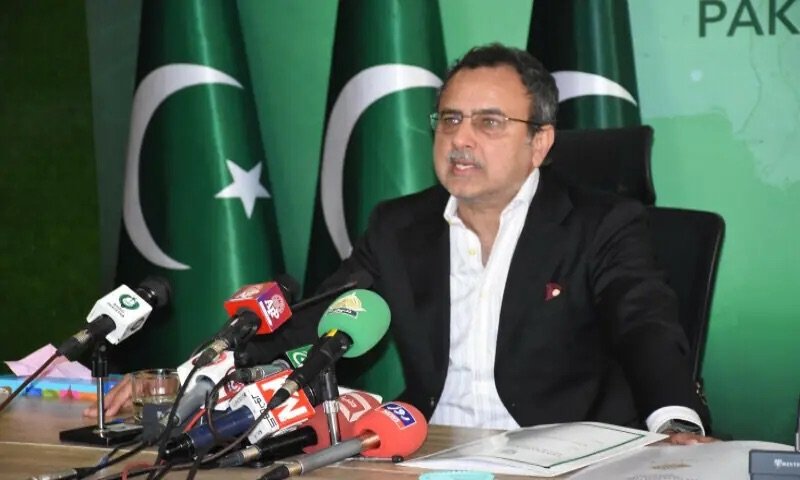
Federal Power Minister credits renewable shift for 24-hour reliance on low-cost energy sources.
Key Takeaways
• Pakistan’s power grid recently operated entirely on low-cost sources, including 19,000 MW of combined net-metered and off-grid solar energy.
• Circular debt has been reduced by approximately PKR 1 trillion, alongside the eradication of PKR 3.5 trillion in long-term IPP liabilities.
• Major structural reforms include the privatization of DISCOs and the launch of the ISMO to liberalize the national energy trading market.
Money Matters Monitoring – Federal Minister for Power, Sardar Awais Ahmad Khan Leghari, announced a significant shift toward renewable energy and structural reforms in the national power sector via a statement on 𝕏. He confirmed that Pakistan’s electricity consumer base has been powered by “cheap, reliable sources” including nuclear, coal, wind, and solar for the past 24 hours.
Renewable Energy and Grid Stability
The Minister highlighted the success of solar energy, noting that net-metering systems, introduced during his 2017 tenure, now contribute over 7,000 MW of capacity. An additional 12,000 MW of off-grid solar generation is currently active, supported by zero-duty import policies for panels and inverters. Despite recent “load management” challenges caused by a temporary fuel supply crisis and reduced hydropower, the reopening of the Strait of Hormuz is expected to restore electricity supply via RLNG plants.
“Through serious reforms, we have managed to reduce industrial electricity prices from 18 to 11.5 cents per kWh to boost productivity”: Awais Leghari
Financial and Structural Reforms
Minister Leghari reported that circular debt has been reduced by nearly PKR 1 trillion, significantly improving the sector’s financial health. Furthermore, negotiations with Independent Power Producers (IPPs) have reportedly eliminated a PKR 3.5 trillion burden that was projected over the next 15 years. To further liberalize the sector, the government has established the Independent System and Market Operator (ISMO) to facilitate a bilateral energy trade market, ending the state’s role as the sole procurer of power.
Relief for Consumers
Electricity prices for the industrial sector have decreased from 18 cents to 11.5 cents per kWh, while domestic consumers have also seen tariff reductions. Looking ahead, the government is focusing on an $800 million transmission line and utility-scale battery storage projects, supported by the World Bank and Asian Development Bank, with completion targeted by mid-2026.
The End of Privilege: Merit vs. Emoluments
In a separate development, the Lahore High Court (LHC) upheld the federal government’s decision to formally abolish the long-standing facility of free electricity units for power sector officers. On April 17, 2026, Federal Minister for Energy Awais Leghari confirmed that the court dismissed petitions challenging the policy, marking a historic shift in the country’s energy sector. Under this reform, officers from BPS-17 to BPS-22 across WAPDA, DISCOs, GENCOs, and other power entities are now required to pay their electricity bills like ordinary consumers. The policy, which was initially notified in late 2023, has been fully validated as a legitimate executive measure aimed at reducing the multi-billion rupee financial burden on the national exchequer and addressing the chronic circular debt crisis.
While the broader public has largely welcomed the move as a long-overdue step toward social equity and fiscal responsibility, the policy has met with a nuanced and mixed response from within the administrative ranks. For the general citizenry, burdened by rising tariffs, the end of “privileged consumption” is seen as a victory for fairness. However, affected employees, particularly those who viewed these units as a contractual part of their emoluments, feel a sense of sudden deprivation.
Disclaimer: This report is for informational purposes and does not necessarily reflect the views of ‘Money Matters Pakistan’. We welcome any corrections or alternative viewpoints from our readers to ensure a balanced perspective.