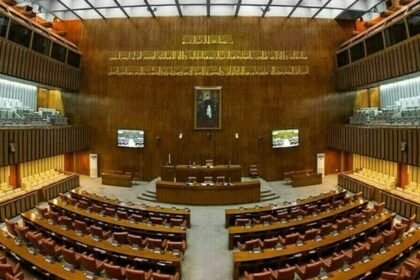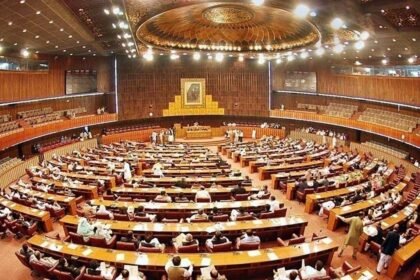

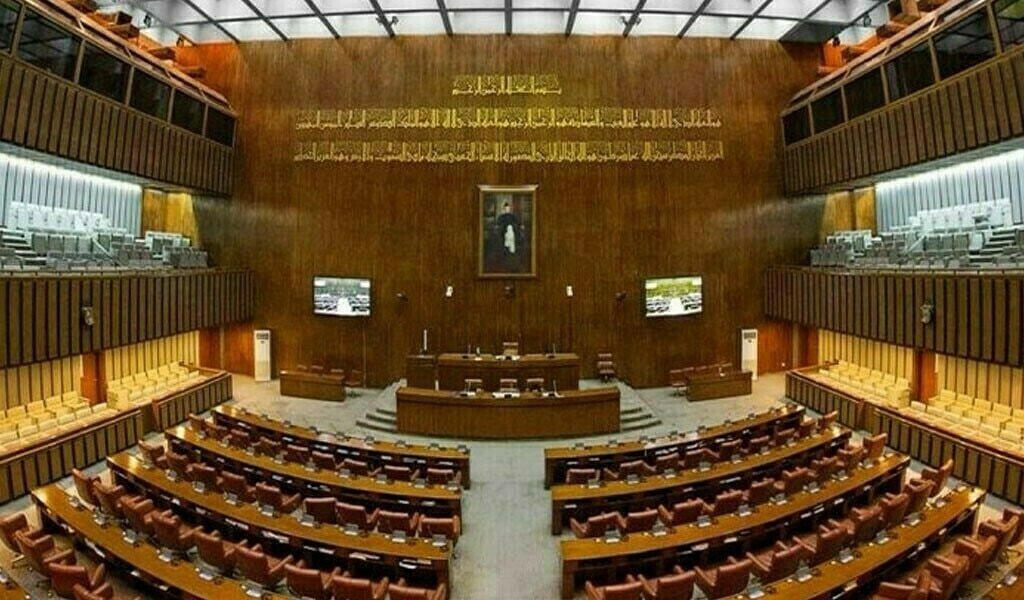
Senate panel uncovers how over 200 state bodies have parked Rs1,000 billion in commercial banks instead of the national treasury.
Key Takeaways:
- Over 200 SOEs, regulators and autonomous bodies have kept Rs1,000 billion in commercial bank accounts, bypassing the Federal Consolidated Fund in violation of the PFM Act 2019.
- These same commercial banks where public money sits have been lending back to the government at high interest rates, a conflict senators described as an outright scam.
- The Finance Ministry failed to enforce Section 36 of the PFM Act for seven years, with the Finance Secretary absent from Thursday’s Senate committee meeting altogether.
Islamabad, Pakistan – A Senate committee has stumbled upon what lawmakers are calling one of the most brazen financial governance failures in recent memory: over 200 state-owned entities, regulators and autonomous bodies have been sitting on Rs1,000 billion in commercial bank accounts instead of depositing the funds into the Federal Consolidated Fund (FCF), a direct and years-long violation of a law parliament passed back in 2019.
A news story published by The News International revealed that the Senate Standing Committee on Finance was left stunned during Thursday’s session when the full scale of the non-compliance came to light.
The government borrowed from the same banks where its own entities had parked public money. That is not mismanagement. That is paying interest on funds you already owned.
A Scam Hidden in Plain Sight
The Public Finance Management (PFM) Act 2019 requires that public money held by state bodies be deposited into the Federal Consolidated Fund rather than kept in private commercial bank accounts. Yet seven years after parliament passed the law, the Ministry of Finance had issued no notification under Section 36 to enforce compliance, effectively turning a blind eye to the arrangement.
The consequences are not merely technical. As Senate Standing Committee Chairman Senator Saleem Mandviwalla put it plainly: “This is a clear scam because such a huge amount is parked in commercial banks and these banks provided loans to the government at exorbitant rates.” In other words, the government has been borrowing money at high cost from the very banks where its own entities had deposited public funds. Funds that should have been available to the national treasury in the first place.
The Numbers and the Anger
Ruling party Senator Anusha Rahman, who triggered the heated exchange, told the committee her own estimates put the figure even higher, at around Rs2,000 billion parked outside the government’s overall financing framework. She repeatedly pressed Additional Secretary Finance (Budget) Iftikhar Amjad on why the mandatory notification under Section 36 had never been issued. His replies, the story notes, were described as confusing and failed to satisfy the senators. Finance Secretary Imdad Ullah Bosal did not attend the meeting at all.
The committee also heard that the Securities and Exchange Commission of Pakistan (SECP) had spent Rs1.19 billion on perks, privileges, gratuity and pension with board approval, a move the Auditor General flagged as an audit objection, while the Finance Ministry stayed silent during two consecutive Departmental Audit Committee meetings.
A law passed seven years ago. A notification never issued. A Finance Secretary absent from the meeting. This is not an oversight. It is a system that worked exactly as someone wanted it to.
An Assurance, Not Yet a Fix
Minister of State for Finance Bilal Azhar Kiani stepped in toward the close of the session, assuring the committee he would personally take up the matter to push for effective enforcement of the PFM Act, seven years after it was enacted.
The committee was also briefed separately by the Federal Board of Revenue on the status of asset declarations by government servants, with officials informing senators that a digital asset declaration mechanism would be in place by December 2026.
For a government currently stretching every rupee to meet IMF reserve targets and repay billions in external debt, the revelation that a trillion rupees of public money has been sitting idle, and commercially profitable for banks, is a governance failure that demands more than an assurance.