


New mechanism aims to shift transaction costs from long-term holders to those making large, sudden redemptions.
Key Takeaways
• SECP proposes Swing Pricing to stop long-term mutual fund investors from paying for transaction costs triggered by sudden market exits.
• The mechanism shifts brokerage and transaction fees directly to those making large trades, ensuring fairer cost distribution for all.
• This reform aligns Pakistan with global standards, aiming to stabilize the mutual fund industry during periods of high economic stress.
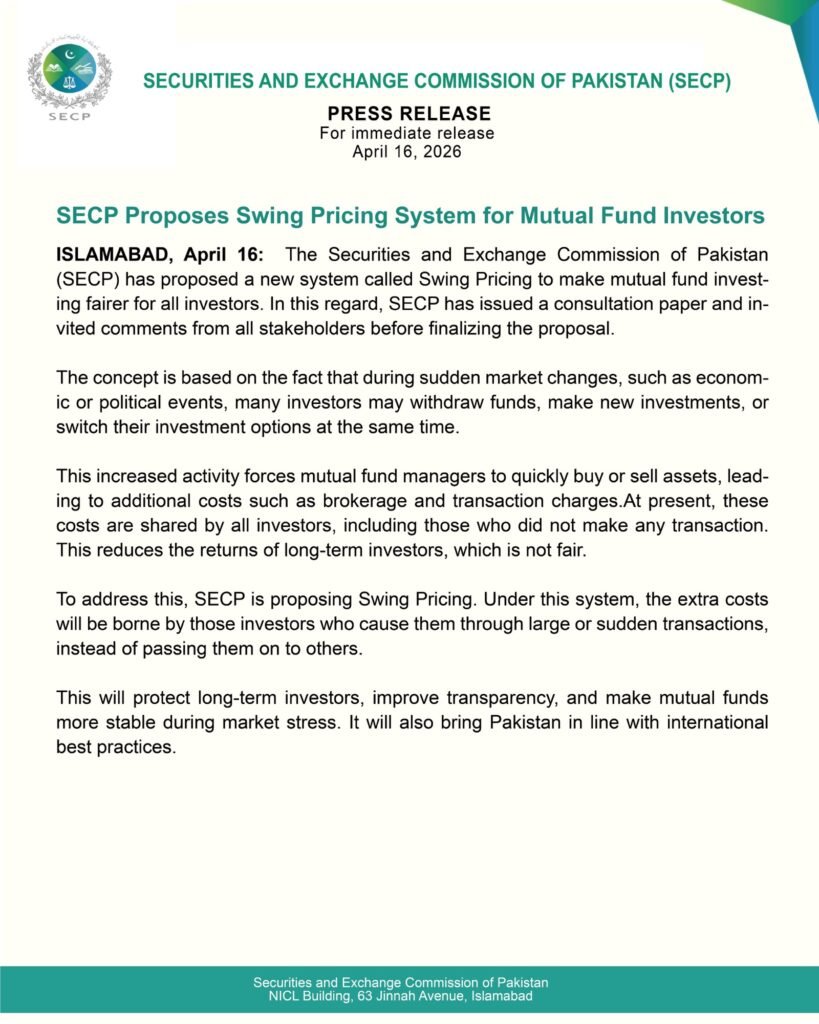
Karachi, Pakistan – The Securities and Exchange Commission of Pakistan (SECP) has introduced a consultation paper proposing a “Swing Pricing” system to ensure equity within the mutual fund sector. This move seeks to address the dilution of returns for long-term investors caused by the transaction costs of others.
Protecting Your Long-Term Savings
The introduction of swing pricing is a critical step for the general public and retail investors because it removes a hidden “tax” on loyalty. In a standard mutual fund, every time a large institutional investor “panics” and exits, the resulting brokerage costs lower the fund’s value for the small-scale family saver who stays put. By isolating these costs, the SECP is creating a fairer environment where long-term participants are no longer subsidizing the entry and exit fees of high-volume traders. This makes mutual funds a more attractive, transparent, and stable vehicle for household wealth creation in Pakistan.
The proposed system will protect long-term investors and improve transparency across the mutual fund industry.
Cost Equity in Mutual Funds
Current market structures often penalize stationary capital. When sudden economic or political events trigger mass withdrawals, fund managers must liquidate assets rapidly. The resulting brokerage and transaction charges are currently shared by the entire fund, effectively reducing the net asset value (NAV) for those who did not trade.
Under the proposed Swing Pricing model, these extra costs will be borne exclusively by the investors who cause them through large or sudden transactions. This ensures that the “cost of liquidity” is paid by the user of that liquidity, rather than being socialized across the fund’s participant base.
Enhancing Market Stability
According to Business Recorder SECP is currently inviting comments from stakeholders before finalizing the proposal. This regulatory shift is expected to discourage “panic selling” during volatile periods by making large-scale exits more expensive, thereby protecting the stability of the collective investment scheme.
Disclaimer: This report is for informational purposes and does not necessarily reflect the views of ‘Money Matters Pakistan’. We welcome any corrections or alternative viewpoints from our readers to ensure a balanced perspective.