
SBP Governor reveals a strategy that has shored up forex reserves but weakened the rupee and exposed failure to grow export earnings as the primary reserve-building tool.
Key Takeaways:
- The SBP has purchased $27 billion from the open market since January 2023, including $4.5 billion this fiscal year alone, to build foreign exchange reserves in the absence of adequate export growth.
- These purchases have suppressed the rupee, which would have been significantly stronger had $27 billion remained in circulation, adding to the cost-of-living burden for ordinary Pakistanis.
- Reserves are expected to cross $17 billion imminently and reach $18 billion by June 2026, but the strategy depends on continued market purchases and bilateral inflows rather than sustainable export-led earnings.
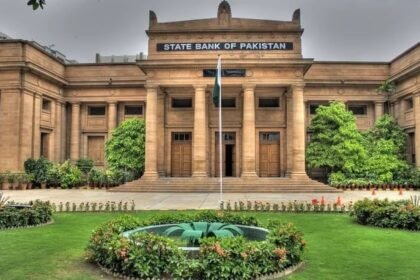
Karachi, Pakistan – The State Bank of Pakistan has built its foreign exchange reserves the hard way — by spending $27 billion buying dollars from the open market over three and a half years, in a strategy that has shored up the balance sheet but revealed the structural failure at the heart of Pakistan’s external account: the country simply does not export enough to fund itself.
Every dollar the SBP pulled out of the market to park in reserves is a dollar that weakened the currency ordinary Pakistanis use to buy imported goods.
SBP Governor Jameel Ahmad made the disclosure while briefing the National Assembly Standing Committee on Finance, as reported by The Express Tribune. Since January 2023, the central bank has bought $27 billion from the open market, including $4.5 billion in this fiscal year — a figure about $3 billion higher than the amount the governor had disclosed less than two months ago.
Reserves Rising, But the Method Matters
The governor told the committee that reserves are increasing every week despite $5 billion in debt repayments made in April, and will soon cross $17 billion. As Dawn reported, the expected $1.2 billion disbursement from the IMF would take foreign exchange reserves beyond $17 billion by the end of the current fiscal year — sufficient for three months of import cover.
On the surface, this looks like progress. But the mechanism behind the reserve build-up carries a significant and rarely acknowledged cost. The massive market purchases have weakened the rupee, which otherwise would have been stronger due to the availability of $27 billion in the market. The heavy reliance on market purchases also reflects the failure of the IMF programme to attract sufficient non-debt-creating inflows to build reserves.
In plain terms: the SBP has been competing with exporters, businesses and the public for available dollars — removing them from circulation to lock them in reserves. This has kept the rupee weaker than it would otherwise have been, which inflates the cost of every imported good from fuel to food to medicines.
The disclosure lays bare a fundamental structural vulnerability. Unlike previous IMF programmes that generated multilateral and commercial inflows sufficient to rebuild reserves, this time Pakistan is heavily dependent on bilateral lenders and market purchases — pointing to the country’s failure to generate sufficient non-debt-creating inflows such as exports, foreign direct investment and remittances beyond what is already being received.
Ahmad told lawmakers that Q3 economic growth was projected at well above 4%, supported by large-scale manufacturing and broader economic activity. Finance Minister Muhammad Aurangzeb also informed the committee that Pakistan had received regulatory approval from China for its inaugural Panda bond launch, expected within 10 days — a step toward diversifying the country’s financing sources.
One exchange during the committee session stood out for what was not said. Committee Chairman Syed Naveed Qamar did not allow MNA Jawed Hanif to ask a question about the interest rate on the $3 billion new debt Pakistan took from Saudi Arabia to repay a $3.5 billion debt to the UAE — a line of questioning that would have raised uncomfortable questions about the cost of Pakistan’s bilateral borrowing strategy and the terms on which its reserves are being built.
Meanwhile, annual inflation rose to 10.9% in April due to global supply shocks and the government’s decision to pass on taxes and global prices to domestic consumers. Governor Ahmad defended the recent 100 basis point rate hike, saying that while energy prices were driving inflation, core inflation was also rising — making the monetary policy committee’s decision a prudent one.