
PSX sheds 6,600 points as US-Iran talks collapse.
Key Takeaways:
- Fitch Ratings has affirmed Pakistan’s long-term foreign currency credit rating at B- with a stable outlook, crediting fiscal consolidation and IMF programme discipline, but has issued a sharp warning that Pakistan’s near-total dependence on Gulf oil imports makes it acutely vulnerable to the escalating Middle East conflict.
- Pakistan’s foreign exchange reserves reached just under $28.4 billion in February 2026, but Fitch projects they will fall to $21.3 billion by the end of FY26 after debt repayments and a Eurobond maturity, covering only 2.9 months of external payments.
- The Pakistan Stock Exchange’s benchmark KSE-100 index plunged 6,600 points or 3.95 per cent on Monday after US-Iran talks in Islamabad collapsed without a deal, with oil prices surging back above $100 per barrel following the US Navy’s move to restrict shipping through the Strait of Hormuz.
Islamabad, Pakistan – Pakistan received a diplomatic nod from one of the world’s most closely watched credit rating agencies on Monday, but the same day handed investors at the Pakistan Stock Exchange a reason to panic. The two events unfolded in parallel, and together they tell the full story of where Pakistan’s economy stands right now.
Fitch Ratings affirmed Pakistan’s long-term foreign currency issuer default rating at B- with a stable outlook on Monday. Pakistan Today reported that Fitch said the decision reflects progress in fiscal consolidation and broader macroeconomic stabilisation measures largely aligned with the country’s IMF programme, adding that Pakistan’s policy steps were supporting its funding capacity and that foreign exchange buffers rebuilt over the past year were providing some protection against the economic effects of the war in the Middle East.
Mettis Global reported that Fitch highlighted the recent staff-level agreement between Pakistan and the IMF on the third review of the Extended Credit Facility and the second review of the Resilience and Sustainability Facility, with approval by the IMF board expected to unlock about $1.2 billion, helping reinforce policy discipline and unlock further bilateral and multilateral funding.
Fitch holding Pakistan at B- is not a triumph. It is a holding pattern. The rating says Pakistan is doing just enough, while warning that one energy shock could undo months of hard-won stability.
The Reserves Picture and What Comes Next
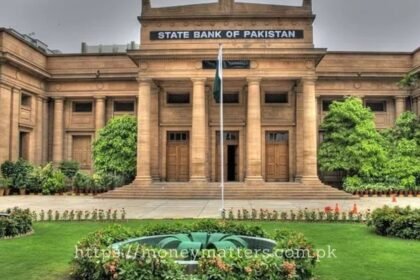
The foreign exchange figures Fitch cited offer a mixed picture. Pakistan Today reported that according to Fitch, large and sustained net foreign exchange purchases by the State Bank of Pakistan in the interbank market, along with a rally in gold prices, had lifted foreign reserves to just under $28.4 billion in February 2026, while non-gold reserves rose by about $5.1 billion year-on-year to $17.5 billion.
But Fitch also warned that this cushion will shrink considerably. The same Pakistan Today report noted that Fitch said the current account deficit and repayment of a $1.3 billion Eurobond and UAE deposits in April are expected to bring foreign exchange reserves down to $21.3 billion by end-FY26, covering 2.9 months of current external payments, down from $22.6 billion at the end of FY25.
ProPakistani reported that Fitch projects inflation to average 7.9 per cent in FY26, up from FY25, driven by energy costs and subsidy restructuring, while GDP growth is projected at 3.1 per cent in FY26, slightly above FY25, supported by improved confidence and lower borrowing costs.
The Energy Warning Pakistan Cannot Ignore
The most pointed section of the Fitch assessment concerns energy vulnerability. Pakistan Today reported that Fitch stated Pakistan sources up to 90 per cent of its oil from the Gulf and has limited storage capacity, leaving it highly exposed to the Middle East conflict and any tightening of energy supply through the Strait of Hormuz, and that fuel subsidies introduced since early March had been financed through the reallocation of spending from other parts of the budget.
Mettis Global added that Fitch warned that Pakistan’s rating could be downgraded if external liquidity weakens sharply or if fiscal consolidation stalls, leading to rising debt levels, and that governance indicators remain a key weakness, with Pakistan scoring poorly on political stability, rule of law, and corruption metrics.
The PSX Collapse That Happened the Same Day
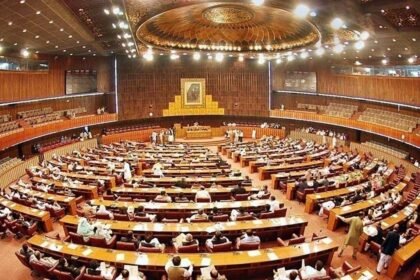
While Fitch was offering its measured endorsement, the Pakistan Stock Exchange told a different story. The Express Tribune reported that the KSE-100 index nosedived 6,600.05 points, or 3.95 per cent, to settle at 160,591.33, as broad-based selling pressure persisted throughout the session, coming under intense pressure after Islamabad hosted talks between the United States and Iran, with oil prices surging over 7 per cent to exceed $100 per barrel following US President Trump’s announcement of a blockade on maritime traffic.
Geo.tv reported that the KSE-100 Index closed at 160,591.33, down 6,600.04 points or 3.95 per cent, as stocks at the bourse fell after US-Iran talks failed to secure a lasting breakthrough, while renewed Strait of Hormuz tensions drove oil back above $100 per barrel and kept investors on edge.
The KSE-100 fell 6,600 points the same day Fitch held Pakistan’s rating steady. Markets and rating agencies were looking at the same country and reaching very different conclusions about the next few months.
KTrade Securities Equity Trader Ahmed Sheraz told The Express Tribune that the KSE-100 opened sharply lower as investor sentiment turned cautious amid no deal reached in the Islamabad-brokered talks, with escalating uncertainty lifting global oil prices to $104 per barrel and adding further pressure on equities, though the broader outlook remained constructive as both the US and Iran had indicated their intent to uphold the ceasefire.
The World Economic Forum has noted that the effective closure of the Strait of Hormuz for most commercial traffic, which normally carries around 20 per cent of global oil and 21 per cent of LNG, is driving a major shift in the global financial outlook, with the IEA warning that the situation is very severe and that both policymakers and investors have yet to fully grasp the potential impact of what has been described as the largest supply disruption in the history of the global oil market.