
As the US-Iran conflict cuts off LNG supply routes through the Strait of Hormuz, Pakistan’s citizen-driven solar revolution is proving to be a real defence against an energy catastrophe.
Key Takeaways:
- Pakistan’s solar capacity, roughly 8,000 MW of net-metered systems feeding the grid daily, has prevented daytime power outages despite near-zero LNG arrivals since March 2026.
- Pakistan avoided over $12 billion in oil and gas imports since 2020 due to solar, with a further $6.3 billion in potential savings by year-end.
- While solar buffers daytime demand, evening load shedding of six to seven hours persists as LNG-fired plants remain crippled by supply disruptions caused by the conflict.
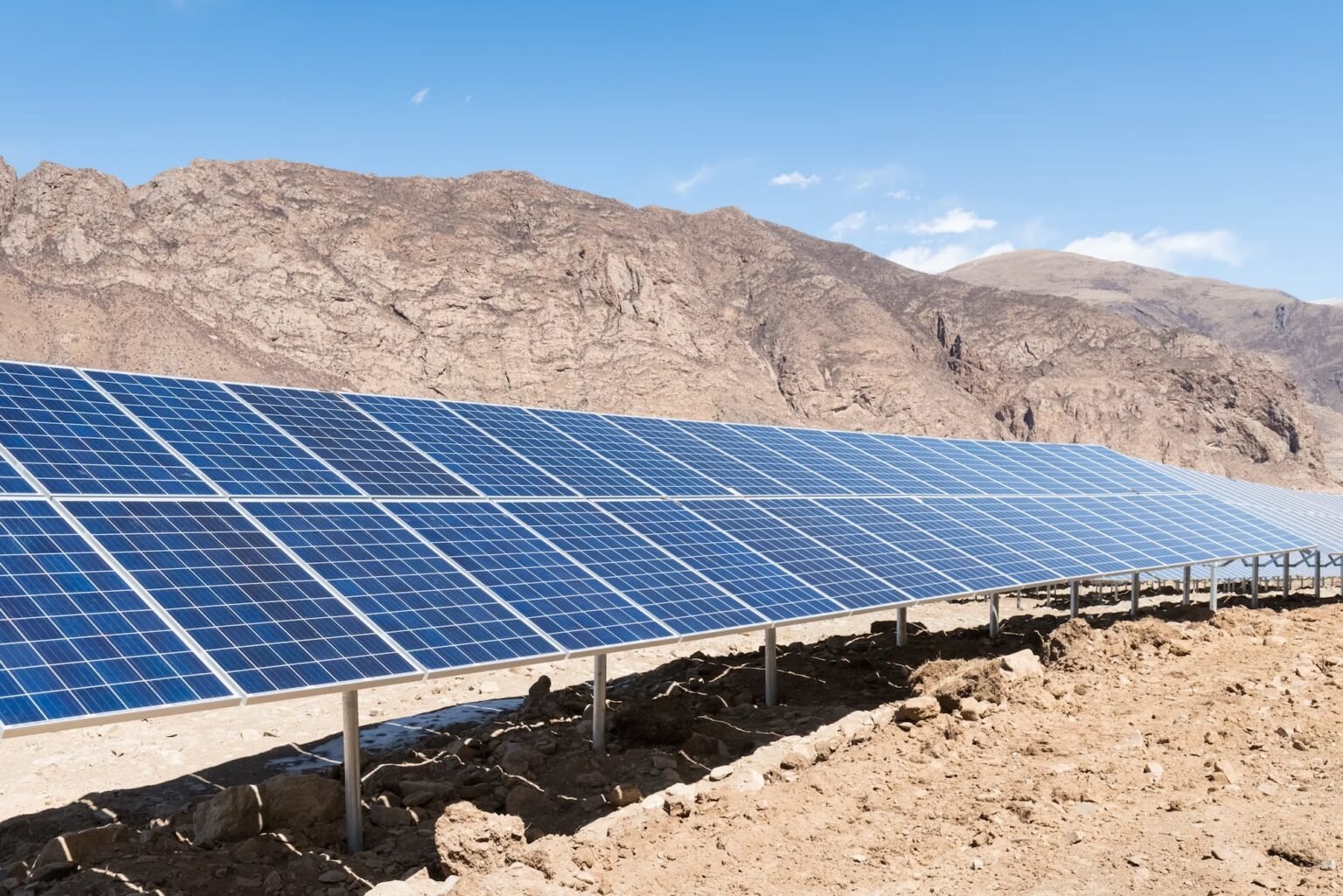
Karachi, Pakistan – When Pakistani households began installing cheap Chinese solar panels on their rooftops from 2022 onwards, they were trying to escape expensive grid electricity and relentless load shedding. Few imagined those panels would one day serve as a partial shield against the fallout of a war between two superpowers. Yet that is precisely what is happening.
Federal Minister for Energy (Power Division) Sardar Awais Ahmad Khan Leghari confirmed last week that around 8,000 MW of installed net-metered solar capacity is now feeding into Pakistan’s national grid during daylight hours — effectively eliminating daytime load shedding even as the country grapples with a 3,400 MW power shortfall and near-complete disruption of LNG supplies.
Pakistan avoided $12 billion in fuel imports since 2020 because its citizens decided to put solar panels on their rooftops. No government programme delivered that. The market did.
The War That Closed the Gas Tap
When the US-Israel war on Iran began in March 2026, it triggered immediate consequences for Pakistan’s energy supply chain. Eighty percent of Pakistan’s oil imports and virtually all of its LNG — sourced almost entirely from Qatar and the UAE — transit the Strait of Hormuz. As Al Jazeera reported, Pakistan received between eight and 12 LNG shipments a month through 2025 and into early 2026, with 12 arriving in January alone. In March, the month the war began, only two shipments arrived. Qatar’s LNG shipments to Pakistan have stopped almost completely since March 2.
The price impact was immediate too. Before the war, Pakistan was procuring LNG at $10.47 per MMBtu. By mid-March, that had already risen to $12.49, a 19 percent jump in a single month, and has only climbed further since.
The result: LNG-fired power plants that once contributed thousands of megawatts to the grid are now running at a fraction of their capacity or on costlier alternative fuels. Hydropower has offered little relief either, generation at Tarbela and Mangla has dropped from around 3,200 MW last year to roughly 1,671 MW this April, with water being prioritised for agriculture. Furnace oil plants are running at full capacity to compensate, but cannot fully close the gap.
Solar as an Accidental Energy Security Policy
What has saved Pakistan from a complete crisis is a solar revolution that was never designed with energy security in mind, but has functioned as exactly that. As NPR reported, Nabiya Imran of Pakistani think tank Renewables First described Pakistan’s energy transition as “not just a story about climate, but also a story about risk management for energy security,” adding that solar and batteries serve as a hedge against the price shocks to which fossil fuel markets are globally vulnerable.
The numbers behind this hedge are striking. As Green Central Banking reported, analysis by Renewables First and the Centre for Research on Energy and Clean Air (CREA) found that since 2020, Pakistan has avoided over $12 billion in oil and gas imports due to its community-led solar boom, and could save a further $6.3 billion by the end of 2026 if energy prices remain elevated.
Pakistan’s fossil-fuel imports fell 40 percent between 2022 and 2024, while cumulative solar panel imports rose from under 1 gigawatt in 2018 to more than 51 gigawatts by early 2026. Solar Now This staggering scale of consumer-driven adoption, households, businesses and farmers buying cheap panels primarily to cut their electricity bills, has created what amounts to a massive distributed energy buffer, visible in real time during the current crisis.
As Al Jazeera’s feature analysis noted, winter demand in Pakistan currently stands at about 15,000 MW, partly because solar panels now generate between 9,000 and 10,000 MW daily, reducing reliance on the grid.
Solar covers the day. Nothing covers the night. Until battery storage catches up, Pakistan’s evenings remain hostage to a war it is trying hard to end.
The Challenge That Remains
Solar, however, cannot generate electricity after sunset. And this is where Pakistan’s crisis is most acutely felt. Minister Leghari acknowledged that the country faces six to seven hours of evening load shedding under current conditions, with roughly one hour of outages required for every 500 to 600 MW of shortfall. Demand fluctuates sharply in April, ranging from around 9,000 MW to nearly 20,000 MW, and the peak now falls at night, precisely when rooftop panels go dark. Pakistan has not made any spot LNG purchases since the new crisis began, having successfully reduced its dependence on imported fossil fuels to 25 percent from 32 percent before the Ukraine war. Pakistan Today That reduced dependency is cushioning the blow, but not eliminating it.
Consumer prices for diesel and petrol have surged by about 20 percent due to the conflict, and to manage energy shortages the government has introduced a four-day work week and temporarily suspended LNG supplies to its fertiliser plants.
A Warning and a Lesson
Pakistan’s experience is being closely watched globally. As CleanTechnica reported, a 4 GW reduction in midday grid demand can reduce gas consumption by roughly 70 million cubic feet per hour, a tangible, measurable insulation effect that countries still dependent on gas-fired generation during the day cannot replicate.
The lesson for Pakistan’s policymakers, and for the world watching, is clear: the millions of ordinary Pakistanis who installed solar panels to avoid expensive grid power did not know they were building a national energy security buffer. But when the war came, the panels were there to ensure energy security.