
Province eyes 1,000 new buses as fare-free days push public transport to full capacity
Key Takeaways
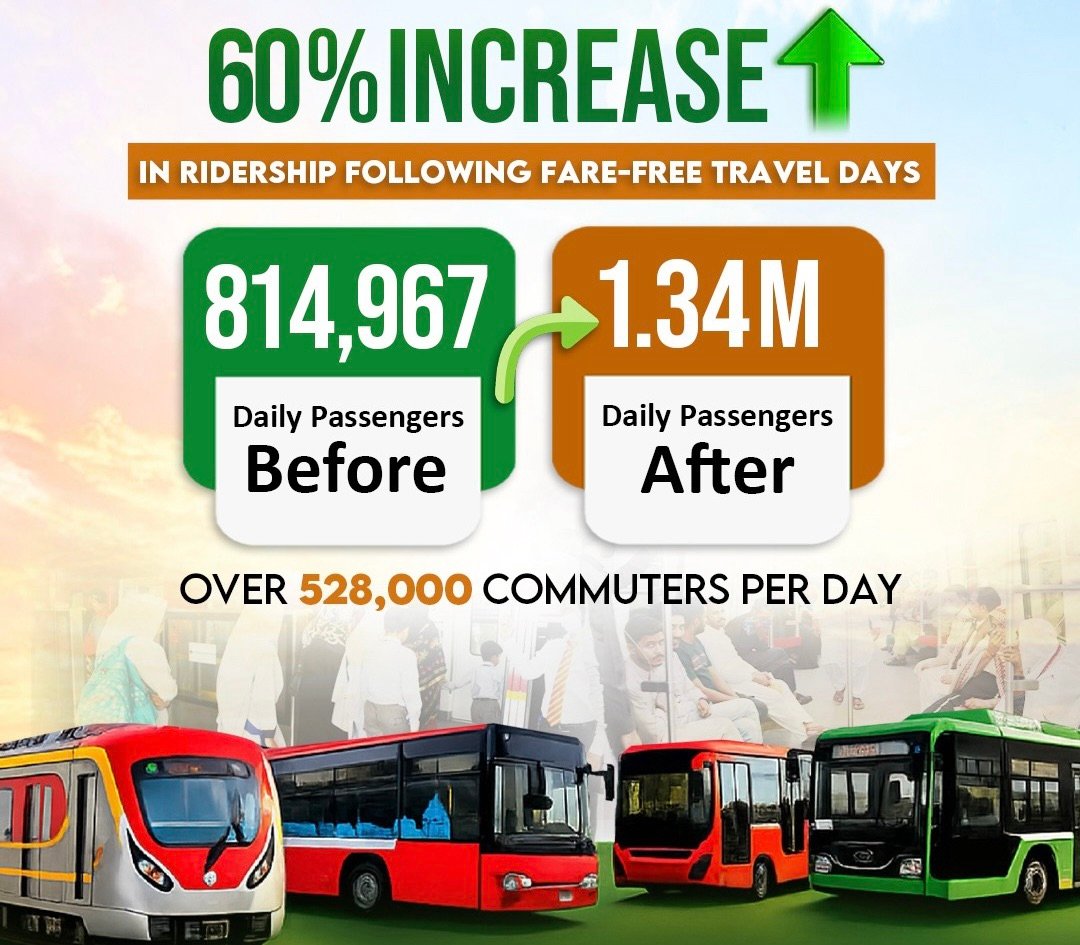
- Ridership boom: Fare-free travel days triggered a 60% jump in Punjab’s public transport usage, with over 528,000 extra daily passengers straining the system to full capacity.
- Fleet expansion underway: The Government of Punjab is adding 1,000 new buses to meet surging demand and ensure the transport network remains reliable and accessible.
- Inclusive mobility push: The initiative signals a policy shift toward treating public transport as an essential, subsidised service — particularly benefiting low-income commuters, students, and working women.
Lahore, Pakistan — In a recent 𝕏 post, the Government of Punjab announced that public transport across the province has witnessed a remarkable 60% surge in ridership following the introduction of fare-free travel days — a people-centred initiative that has clearly struck a chord with daily commuters.
The numbers tell a compelling story. Over 528,000 additional passengers are now boarding Punjab’s public buses every day, a figure that has pushed the existing transport network to its full operational capacity. The spike reflects both the acute demand for affordable mobility and the appetite among ordinary Pakistanis for government services that deliver tangible relief.
With the system running at maximum load, the provincial government says it is not resting on its laurels. To sustain momentum and prevent the network from buckling under pressure, Punjab is moving to expand its fleet by adding 1,000 new buses. The scale-up is intended to ensure that the gains in accessibility and ease of travel are not only maintained but extended to even more commuters across the province.
The initiative carries significance beyond mere numbers. For millions of low-income residents in Punjab’s urban and peri-urban areas — daily wage earners, students, and working women among them — affordable public transport is not a convenience but a lifeline. Fare-free days have, even temporarily, removed a financial barrier that keeps many off formal transit networks altogether.
Officials have framed the expansion as a step toward building an inclusive, efficient, and accessible transport system for all — language that signals the government’s intent to position public mobility as a social right rather than a commercial service.
If sustained, the combination of subsidised fares and fleet expansion could mark a meaningful shift in how Punjab approaches urban mobility, offering a potential model for other provinces grappling with congestion, pollution, and transport poverty.