By using this site, you agree to the Privacy Policy and Terms of Use.
Accept
Money Matters PakistanMoney Matters PakistanMoney Matters Pakistan
  • Home
  • About us
  • Latest
  • News Categories
    • Pakistan Regional Trade & Ties
    • Debt Matters
    • Budget & Taxation
    • Food & Agriculture Economy
    • Public Sector Enterprises
    • Pakistan Economy
    • Exports
    • IMF Matters
    • Energy and Power
    • Analyses/Guest Posts
  • Write for us
  • Contact
Reading: Kyrgyz truck arrives at Sost Dry Port
Share
Notification Show More
Font ResizerAa
Font ResizerAa
Money Matters PakistanMoney Matters Pakistan
Search
  • Home
  • About us
  • Latest
  • News Categories
    • Pakistan Regional Trade & Ties
    • Debt Matters
    • Budget & Taxation
    • Food & Agriculture Economy
    • Public Sector Enterprises
    • Pakistan Economy
    • Exports
    • IMF Matters
    • Energy and Power
    • Analyses/Guest Posts
  • Write for us
  • Contact
Have an existing account? Sign In
Follow US
Money Matters Pakistan > Blog > Pakistan Economy > Kyrgyz truck arrives at Sost Dry Port
Pakistan Economy

Kyrgyz truck arrives at Sost Dry Port

Money Matters
Published April 23, 2026
3 Min Read

Pakistan bypasses Afghanistan for trade with Central Asia via China and Iran. 

Karachi, Pakistan – Pakistan has officially operationalized alternative trade corridors through China and Iran to access Central Asian Republics (CARs), marking a strategic shift to reduce its long-standing reliance on volatile Afghan transit routes.

The China and Iran corridors are no longer just alternatives; they are becoming the preferred routes for regional connectivity.

Sidelining Volatility for Stability

In a decisive move to secure its regional trade interests, Islamabad is no longer treating Afghanistan as the primary gateway to Central Asia. Persistent security risks, frequent border closures at Torkham and Chaman, and high informal levies have forced a recalibration of Pakistan’s connectivity strategy. By leveraging the Quadrilateral Traffic in Transit Agreement (QTTA) with China, Kyrgyzstan, and Kazakhstan, Pakistan is now utilizing the Khunjerab Pass for more predictable logistics.

Simultaneously, the western flank has been strengthened through the Gabd-Rimdan crossing with Iran. This route, though marginally longer, offers lower insurance premiums and a more stable environment for commercial haulage.

A Milestone at the Roof of the World

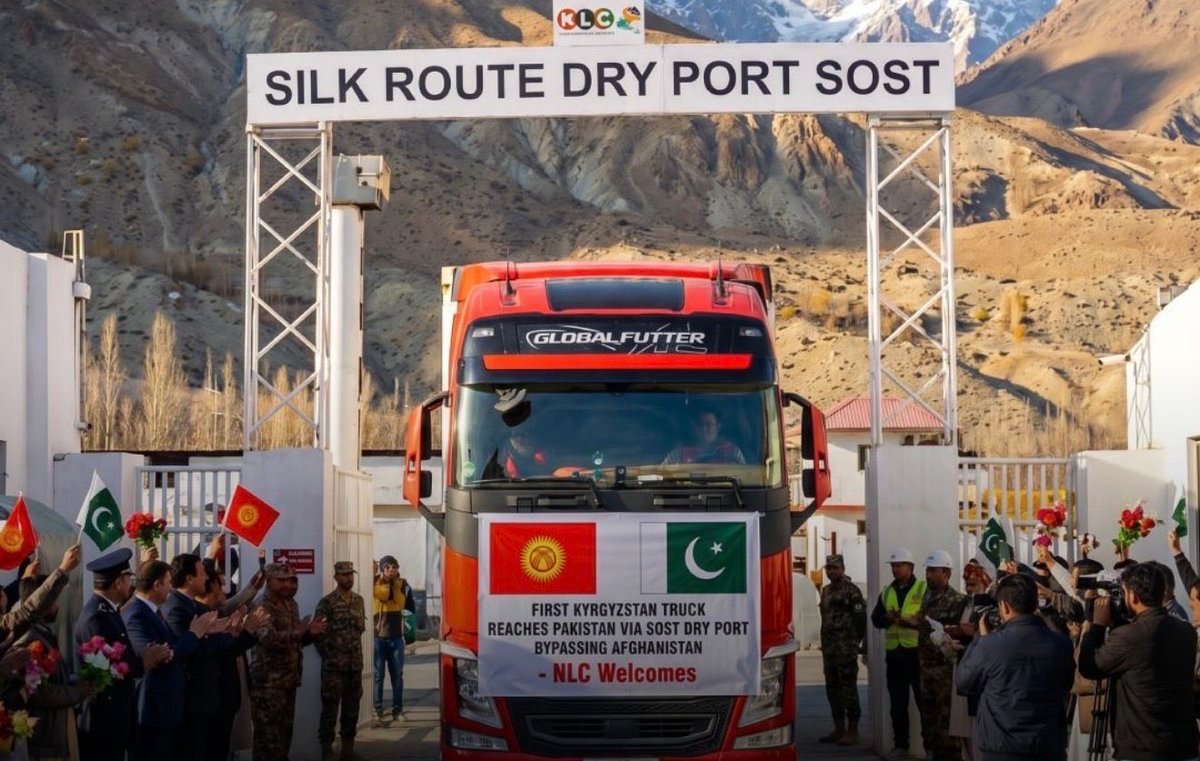
The arrival of the Kyrgyz truck at Sost Dry Port, Pakistan’s highest dry port at 2,800 meters, serves as a proof of concept for the China-route’s viability. A news story published by Business Recorder noted that these parallel corridors are now being positioned as “preferred routes” rather than mere alternatives, reflecting a structural shift in how Pakistan views its northern and western economic borders.

Key Takeaways

• Pakistan activates parallel trade corridors via Khunjerab Pass and Gabd-Rimdan to bypass traditional, unpredictable Afghan routes.

• A landmark truck from Kyrgyzstan arrived at Sost Dry Port via China, signaling a new era of high-altitude regional connectivity.

• The Iran corridor was inaugurated with a frozen meat consignment from Karachi to Tashkent, utilizing the Gabd-Rimdan border crossing.


Disclaimer

This report is for informational purposes and does not necessarily reflect the views of ‘Money Matters Pakistan’. We welcome any corrections or alternative viewpoints from our readers to ensure a balanced perspective.

You Might Also Like

Competition Commission of Pakistan Approves Major Merger in Currency Exchange Sector

EU Issues Stark Warning Over $1 Billion Investment Delay

Naqvi Calls on Businessmen to Repatriate $10 Billion Before Budget

Pakistan’s Economic Challenges Highlighted: A Call for Structural Reforms

Unlocking Global Markets: Easy Guide to Selling on Alibaba from Pakistan

TAGGED:Afghan Transit TradeCPEC Regional ConnectivityGabd-Rimdan BorderKhunjerab PassKyrgyzstan Pakistan TradePakistan Central Asia TradeSost Dry PortTIR Convention Pakistan
Share This Article
Facebook Email Print
Pakistan Economy

Pakistan Achieves Historic Fiscal Deficit Below 1%

May 12, 2026
Remittances

Pakistan Receives $3.5 Billion in Remittances in April — Up 11.4% Year-on-Year

May 11, 2026
Analyses/Guest Posts

“Every Opportunity Became a Business Model for Extraction” — Dr Umar Saif

May 10, 2026
China & CPEC related

Pakistan Eyes Historic Panda Bond Debut in China Next Week

May 10, 2026
Banking sector

SBP Spent $27 Billion Buying Dollars to Build Reserves 

May 8, 2026
  • Home
  • About us
  • Latest
  • News Categories
    • Pakistan Regional Trade & Ties
    • Debt Matters
    • Budget & Taxation
    • Food & Agriculture Economy
    • Public Sector Enterprises
    • Pakistan Economy
    • Exports
    • IMF Matters
    • Energy and Power
    • Analyses/Guest Posts
  • Write for us
  • Contact
Reading: Kyrgyz truck arrives at Sost Dry Port
Share

About US

Are you passionate about economics, finance, or business? Whether you’re a journalist digging into the latest economic policies, an expert unraveling market trends, a student eager to share fresh perspectives, or a budding writer with a knack for financial storytelling, we’d love to hear from you at Money Matters.
Pakistan Achieves Historic Fiscal Deficit Below 1%
May 12, 2026
Pakistan Receives $3.5 Billion in Remittances in April — Up 11.4% Year-on-Year
May 11, 2026
“Every Opportunity Became a Business Model for Extraction” — Dr Umar Saif
May 10, 2026
Pakistan Eyes Historic Panda Bond Debut in China Next Week
May 10, 2026
© Money Matters. All Rights Reserved.
Welcome Back!

Sign in to your account

Username or Email Address
Password

Lost your password?

Not a member? Sign Up