
Record cargo, new shipping lines, fresh policy reforms: Karachi Port’s moment has arrived.
KEY TAKEAWAYS:
- Karachi Port processed more transshipment containers in the first 24 days of March 2026 than in the whole of 2025, a 1,423 percent increase driven by the effective closure of the Strait of Hormuz since March 2.
- The federal government approved landmark new cargo categories for transshipment in early April, including bulk cargo, vehicles via Ro-Ro vessels, and LCL shipments, while major shipping lines including Hapag-Lloyd and OOCL have added or announced new Pakistan port calls.
- Experts say the window to convert this crisis-driven windfall into permanent hub status is real but narrow, with infrastructure bottlenecks, high terminal royalties, and customs gaps all requiring urgent attention.
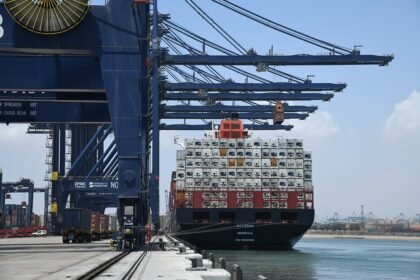
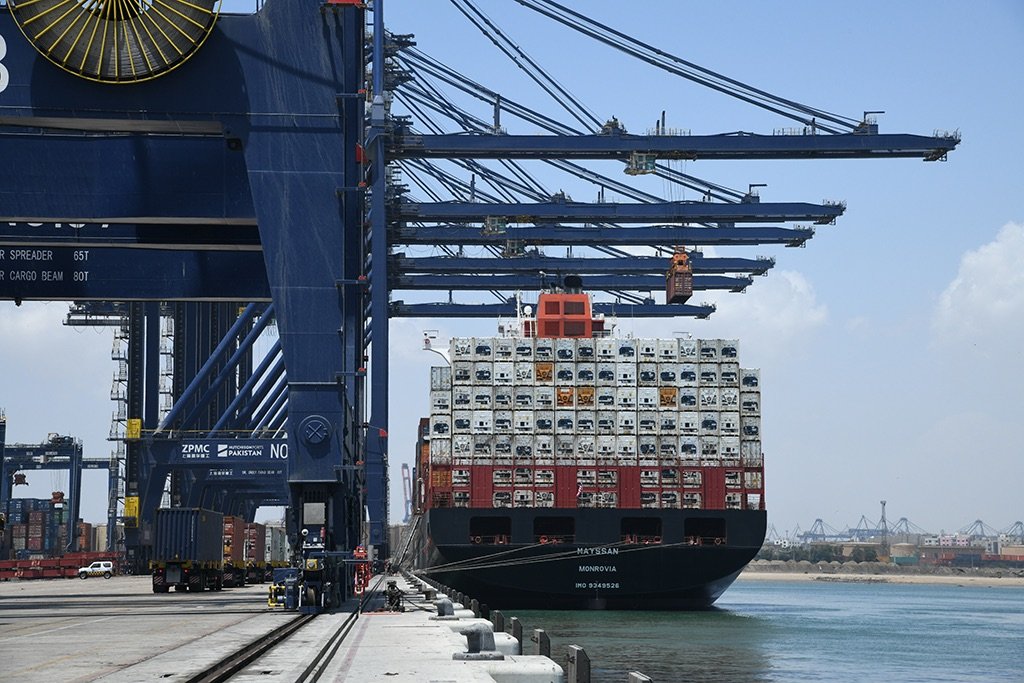
Karachi, Pakistan — Karachi Port has recorded one of the most dramatic surges in transshipment activity in its 172-year history, handling more cargo in a single month than it did in the entire previous year, and the momentum is still building.
The numbers tell a striking story. According to data from the Karachi Port Trust (KPT), in just the first 24 days of March 2026, the port processed 8,313 transshipment containers, matching and slightly exceeding the approximately 8,300 containers handled across all of 2025. A report by ProPakistani put the growth rate at 1,423 percent, a figure that has since been widely cited across Pakistani and international media. By the end of March, the full-month total reached approximately 11,000 Twenty-foot Equivalent Units (TEUs), according to multiple reports.
At the terminal level, South Asia Pakistan Terminal (SAPT) led the surge by handling 5,286 containers, followed by Hutchison Port’s Karachi International Container Terminal at 1,827 containers, and the Karachi Gateway Terminal Limited (KGTL) at 1,200 containers.
Karachi Port operated through Eidul Fitr for the first time in its 172-year history — a quiet but telling sign of just how much the maritime world has shifted toward Pakistan.
Why Global Shipping Came to Karachi
The trigger for this extraordinary shift was the effective closure of the Strait of Hormuz to commercial traffic from March 2, 2026, following the US-Israel war on Iran. Every major container line, including Maersk, CMA CGM, MSC, and Hapag-Lloyd, suspended transits through the waterway. Traditional transshipment hubs like Dubai’s Jebel Ali and Oman’s Port of Salalah became either inaccessible or operationally unreliable due to safety concerns and soaring insurance premiums.
A news story published by Express Tribune noted that the risk premium and insurance cost for delivery inside the Persian Gulf is now four times higher than for Pakistan, making Karachi an attractive and cost-effective alternative for shipping lines. The port, which handles more than half of Pakistan’s foreign trade, absorbed roughly 75 percent of the redirected cargo, with the remaining 25 percent processed at Port Qasim.
The surge was so significant that Karachi Port operations continued through Eidul Fitr, for the first time in the port’s 172-year history.
Government Acts Fast on Incentives and Policy
To capitalise on the opportunity, the government moved quickly. In mid-March, KPT rolled out tariff reductions of up to 60 percent on port dues, wharfage, and storage charges, effective March 18. Ships carrying transshipment cargo equivalent to at least 50 percent of their gross registered tonnage qualified for the full 60 percent discount on port dues, while large container ships carrying at least 25 percent transshipment cargo became eligible for up to a 50 percent reduction in wet charges. The minimum transshipment cargo requirement was also lowered from 10 percent to 7.5 percent.
Even if the war ends today, restoring traditional shipping routes will take at least three months. And experts believe the structural shift in Pakistan’s favour could last four to five years.
On March 9, KPT and private terminal operators waived demurrage charges on auctionable containers, provided they were cleared within seven days, to ease congestion and free up space for incoming transshipment cargo.
The policy push has continued into April. On April 2, the federal government, acting on recommendations of a high-level committee formed by Prime Minister Shehbaz Sharif and headed by Maritime Affairs Minister Muhammad Junaid Anwar Chaudhry, approved a package of landmark transshipment reforms. For the first time, Pakistan approved the handling of bulk and break-bulk cargo under transshipment arrangements, covering commodities such as grains, coal, minerals, and project cargo. The government also approved specialised Roll-on/Roll-off (Ro-Ro) operations for vehicle transshipment, allowing the movement of cars, SUVs, and other wheeled cargo through Pakistani ports. Less-than-Container Load (LCL) cargo handling was also cleared, enabling consolidation and redistribution of smaller shipments, a move designed to attract global freight forwarders.
Also on April 2, the minister granted a 30-day deadline for the removal of old and stranded containers at Karachi Port, directing authorities to develop a commercial mechanism for transferring cargo to off-dock terminals to reduce congestion. The ministry has also assured traders that no war-related surcharges are being imposed on in-transit cargo at Pakistani ports, following confirmation from shipping agents.
New Shipping Lines Are Taking Notice
The policy momentum is already attracting new international interest. Following a drone strike that briefly shut down operations at Salalah, Hapag-Lloyd added ad hoc westbound sailings on its India-to-US East Coast service calling at Port Qasim, a notable shift as the carrier had previously stopped calling Karachi due to trade restrictions with India, routing Pakistani cargo via Salalah instead.
In a further sign of growing confidence, Orient Overseas Container Line (OOCL) announced a new Southeast Asia-to-Indian subcontinent service, its first dedicated route linking Southeast Asia with India’s west coast and Pakistan. The service is set to launch on April 26 and will include the Port of Karachi on a loop with major transshipment hubs, including the Port of Singapore and Malaysia’s Port Klang.
A dedicated feeder service connecting Karachi Gateway Terminal with the UAE ports of Fujairah and Khor Fakkan was also launched on March 11, providing Pakistani importers and exporters with a reliable link to global shipping networks.
Revenue Opportunity and the Risks That Come With It
The financial upside for Pakistan is real. Higher port dues, berthing fees, and handling charges, even after applying discounts, translate into meaningful revenue for KPT. The maritime ministry has said the reforms are expected to increase port revenues, generate foreign exchange earnings, and create jobs in logistics and allied sectors.
However, the rapid increase in activity has exposed serious infrastructure gaps. Reports point to congestion risks, long queues of containers, and the need for faster customs clearance. A returned cargo vessel, MV Celsius Emmen V-022, which had departed on March 2 with export cargo bound for Middle Eastern ports but was forced back due to regional tensions, exposed a gap in Pakistan’s customs and port handling systems, as authorities found no existing mechanism to process export shipments re-entering domestic waters.
Separately, a report by Arab News noted that private terminal operators are paying royalties of up to $36 per container to KPT, a cost that industry officials say must be addressed to remain competitive with rival ports.
Can Pakistan Hold On to the Gains?
Shipping experts are cautiously optimistic but clear-eyed about what is at stake. Karachi-based shipping expert Aasim Siddiqui told Anadolu Agency that the effects of this disruption could last four to five years, calling it a “golden opportunity to convert this temporary boom into a sustainable business.” He stressed that success would depend on efficiency and competitive costs. Another industry official noted that even if the conflict eases today, restoring traditional shipping routes would take at least three months. Currently, Pakistani ports handle 3.8 million containers annually against a capacity of 6 million, meaning significant room for growth exists if the infrastructure and policy environment can support it.
The government is also looking beyond containers. Plans are underway to establish a Pakistan Maritime Energy City (PMEC), an initiative aimed at meeting domestic and international energy storage and re-export needs as part of a broader strategy to expand Pakistan’s maritime footprint.
Minister Chaudhry has said the goal is clear: “By diversifying cargo handling capabilities and enhancing operational flexibility, we plan to capture a larger share of transshipment traffic.” Industry observers consistently return to the same theme, though: competitive tariffs, infrastructure investment, streamlined customs, and faster clearance will determine whether Karachi becomes the next Colombo or Jebel Ali, or remains a crisis-driven detour.