
By using this site, you agree to the Privacy Policy and Terms of Use.
Accept
Money Matters PakistanMoney Matters PakistanMoney Matters Pakistan
  • Home
  • About us
  • Latest
  • News Categories
    • Pakistan Regional Trade & Ties
    • Debt Matters
    • Budget & Taxation
    • Food & Agriculture Economy
    • Public Sector Enterprises
    • Pakistan Economy
    • Exports
    • IMF Matters
    • Energy and Power
    • Analyses/Guest Posts
  • Write for us
  • Contact
Reading: Artificial Glaciers Boost Water Supply in Northern Pakistan
Share
Notification Show More
Font ResizerAa
Font ResizerAa
Money Matters PakistanMoney Matters Pakistan
Search
  • Home
  • About us
  • Latest
  • News Categories
    • Pakistan Regional Trade & Ties
    • Debt Matters
    • Budget & Taxation
    • Food & Agriculture Economy
    • Public Sector Enterprises
    • Pakistan Economy
    • Exports
    • IMF Matters
    • Energy and Power
    • Analyses/Guest Posts
  • Write for us
  • Contact
Have an existing account? Sign In
Follow US
Money Matters Pakistan > Blog > Pakistan Economy > Artificial Glaciers Boost Water Supply in Northern Pakistan
Pakistan Economy

Artificial Glaciers Boost Water Supply in Northern Pakistan

Money Matters
Published April 7, 2025
3 Min Read

Farmers in Gilgit-Baltistan turn to innovative methods to combat water scarcity


Key Takeaways:

i) Farmers in Gilgit-Baltistan, Pakistan, are utilizing “artificial glaciers” to address water shortages caused by climate change.

ii) This technique involves creating ice towers that act as natural reservoirs, providing a steady water supply for irrigation.

iii) The initiative has significantly improved water access for over 16,000 residents, allowing for increased crop yields.


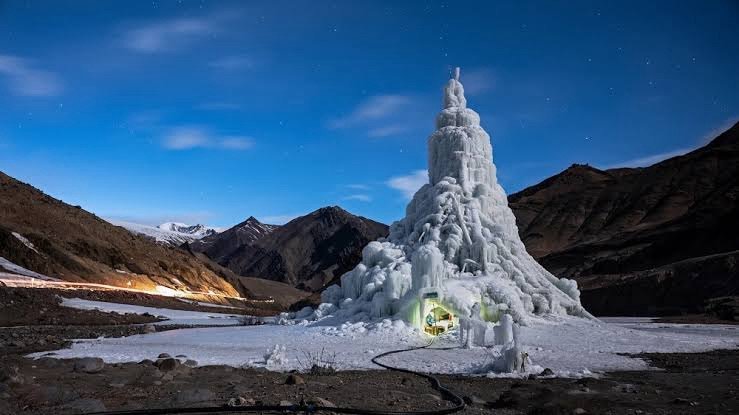
Islamabad, Pakistan – April 7, 2025 – Farmers in the mountainous Gilgit-Baltistan region of northern Pakistan are employing innovative “artificial glaciers” to combat water shortages exacerbated by climate change. This technique, inspired by the work of Indian environmental activist Sonam Wangchuk in Ladakh, involves spraying water into the air during freezing winter temperatures, resulting in the formation of ice towers.

These ice formations, often resembling Buddhist stupas, function as natural reservoirs, slowly melting throughout the spring and providing a consistent water supply for irrigation. According to AFP, Zakir Hussain Zakir, a professor at the University of Baltistan, explains that, “The water must be propelled so that it freezes in the air when temperatures drop below zero, creating ice towers.”

Since the initial implementation of “ice stupas” in Gilgit-Baltistan in 2018, more than 20 villages have adopted this method.

Gilgit-Baltistan, home to over 13,000 glaciers, has experienced a reduction in snowfall due to warmer winters, impacting the critical seasonal snowmelt that feeds the valleys. Sher Muhammad, a specialist at the International Centre for Integrated Mountain Development (ICIMOD), notes, “From late October until early April, we were receiving heavy snowfall. But in the past few years, it’s quite dry.”

Since the initial implementation of “ice stupas” in Gilgit-Baltistan in 2018, more than 20 villages have adopted this method. Rashid-ud-Din, provincial head of GLOF-2, a UN-Pakistan climate change adaptation plan, reports that “more than 16,000 residents have access to water without having to build reservoirs or tanks.”

Farmer Muhammad Raza from Hussainabad states that his village constructed eight stupas this past winter, storing approximately 20 million liters of water. This has eliminated water shortages during planting seasons, enabling farmers to cultivate crops two or three times a year instead of just once.

Yasir Parvi, a local resident, observes, “Faced with climate change, there are neither rich nor poor, neither urban nor rural; the whole world has become vulnerable. In our village, with the ice stupas, we decided to take a chance.”


Keywords: Artificial Glaciers, Gilgit-Baltistan, Water Scarcity, Climate Change, Pakistan, Ice Stupas, Water Crisis, Sustainable Agriculture, Climate Adaptation, Gilgit Baltistan Farmers, Water Management Pakistan, Pakistan Water Crisis.
You Might Also Like

PM Sharif Blocks Exporters’ Tax Relief Amid IMF Concerns

Karachi Port Trust Launches Historic Dredging Operations to Boost Pakistan’s Trade Capacity

Pakistan Finance Minister Asserts India Conflict Won’t Significantly Impact Economy

Punjab’s $50 Billion Meat & Dairy Potential: Fueling Pakistan’s Economic Growth

Fitch Holds Pakistan at B- but Warns on Oil Shock

TAGGED:Artificial GlaciersClimate AdaptationClimate ChangeGilgit Baltistan FarmersGilgit-BaltistanIce StupasPakistanPakistan Water Crisis.Sustainable AgricultureWater CrisisWater Management PakistanWater Scarcity
Share This Article
Facebook Email Print
Pakistan Economy

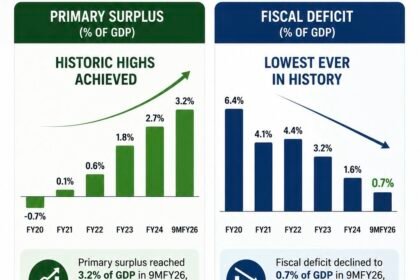
Pakistan Achieves Historic Fiscal Deficit Below 1%

May 12, 2026
Remittances

Pakistan Receives $3.5 Billion in Remittances in April — Up 11.4% Year-on-Year

May 11, 2026
Analyses/Guest Posts

“Every Opportunity Became a Business Model for Extraction” — Dr Umar Saif

May 10, 2026
China & CPEC related

Pakistan Eyes Historic Panda Bond Debut in China Next Week

May 10, 2026
Banking sector

SBP Spent $27 Billion Buying Dollars to Build Reserves 

May 8, 2026
  • Home
  • About us
  • Latest
  • News Categories
    • Pakistan Regional Trade & Ties
    • Debt Matters
    • Budget & Taxation
    • Food & Agriculture Economy
    • Public Sector Enterprises
    • Pakistan Economy
    • Exports
    • IMF Matters
    • Energy and Power
    • Analyses/Guest Posts
  • Write for us
  • Contact
Reading: Artificial Glaciers Boost Water Supply in Northern Pakistan
Share

About US

Are you passionate about economics, finance, or business? Whether you’re a journalist digging into the latest economic policies, an expert unraveling market trends, a student eager to share fresh perspectives, or a budding writer with a knack for financial storytelling, we’d love to hear from you at Money Matters.
Pakistan Achieves Historic Fiscal Deficit Below 1%
May 12, 2026
Pakistan Receives $3.5 Billion in Remittances in April — Up 11.4% Year-on-Year
May 11, 2026
“Every Opportunity Became a Business Model for Extraction” — Dr Umar Saif
May 10, 2026
Pakistan Eyes Historic Panda Bond Debut in China Next Week
May 10, 2026
© Money Matters. All Rights Reserved.
Welcome Back!

Sign in to your account

Username or Email Address
Password

Lost your password?

Not a member? Sign Up