
Key Takeaways:
- China’s investments since 2015 have significantly improved Pakistan’s infrastructure.
- Despite early successes, political instability and delays hindered further progress.
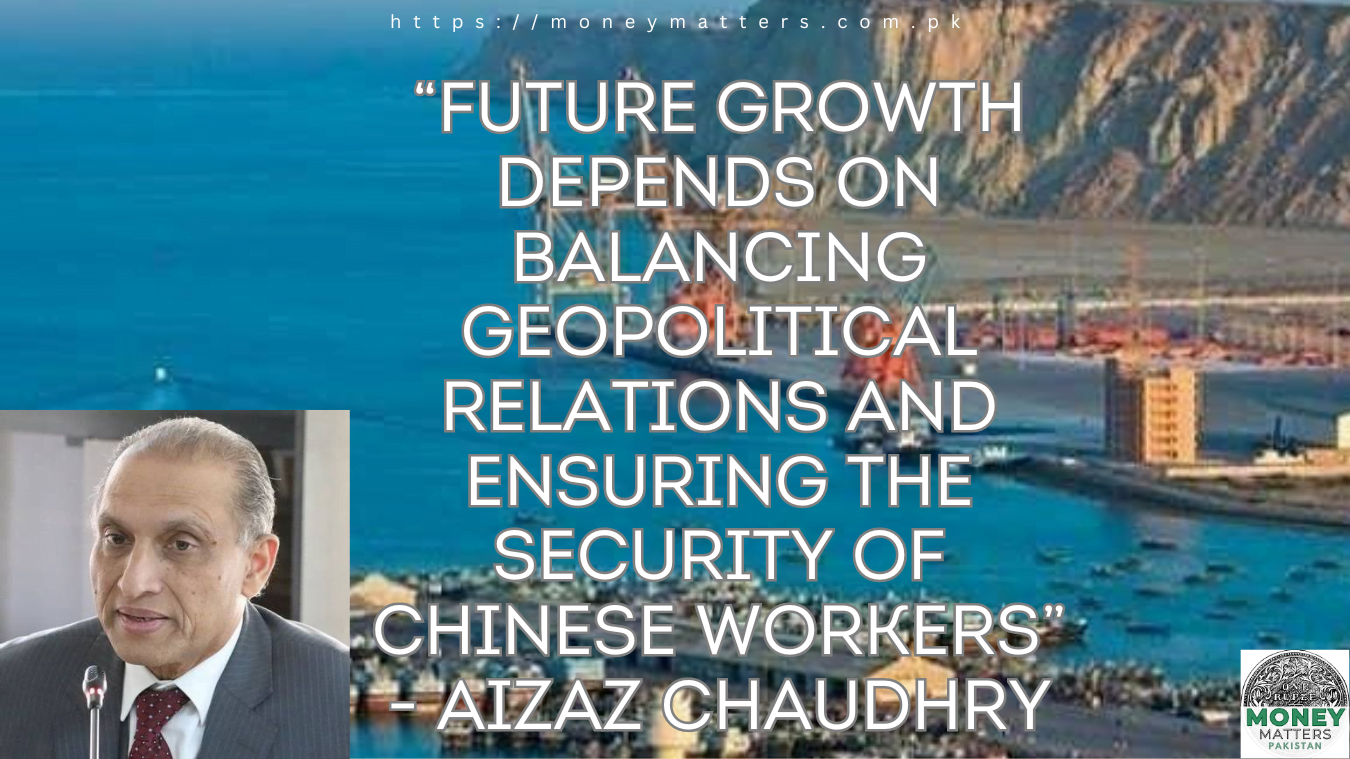
- Future growth depends on balancing geopolitical relations and ensuring the security of Chinese workers.
Introduction
Aizaz Ahmad Chaudhry, former foreign secretary and chairman of the Sanober Institute Islamabad, shared his insights on China’s investments in Pakistan in an article titled “Chinese Investment.” Chaudhry’s analysis provides a comprehensive look at the benefits and challenges of these investments, emphasizing the need for a balanced perspective.
The Context of Chinese Investment
Since 2015, China has poured billions of dollars into Pakistan, primarily through the China-Pakistan Economic Corridor (CPEC). Opinions on the impact of these investments vary. “Most people feel that Chinese investments, led by CPEC, have contributed to improving the country’s road, electricity, and port infrastructure,” Chaudhry explains. However, a smaller segment argues that these investments have pushed Pakistan further into debt, highlighting the need for an objective analysis.
Early Benefits of CPEC
When President Xi Jinping visited Pakistan in April 2015 to launch CPEC, the country was facing significant challenges, including transnational terrorism and diplomatic isolation. Under these dire circumstances, the promised $46 billion in investments from China provided a much-needed boost. “An early CPEC harvest was the reduction in electricity shortage and load-shedding, which had made everyday life difficult and had choked industrial production,” Chaudhry notes. The development of road infrastructure and progress on Gwadar port projects were also significant early successes.
Challenges and Missed Opportunities
Despite these initial achievements, Pakistan struggled to transition to the second phase of CPEC, which focused on industrialization. Chaudhry points out two main reasons for this failure: the delayed development of Special Economic Zones (SEZs) and political instability from 2017 onwards. These issues caused a decline in Chinese investment, which initially was expected to rise to $92 billion but tapered off at around $26 billion.
Current Government’s Initiatives
The present government aims to upgrade CPEC and rejuvenate Chinese investments. During Prime Minister Shehbaz Sharif’s recent visit to China, agreements were made to boost industrialization, digitize the economy, and open new corridors for growth. Plans also include rehabilitating the Karakoram Highway, optimizing the Gwadar port, and training Pakistani experts in technology and agriculture. However, Chaudhry warns that “there are big challenges to its implementation,” particularly due to evolving geopolitics and the security of Chinese personnel.
Geopolitical and Security Challenges
The US-China competition complicates Pakistan’s efforts to balance its relationships with both countries. Chaudhry explains, “The US is doing all it can to check China’s economic rise through trade tariffs, investment curbs, and export controls, and is advising allies and friends to avoid Chinese investments.” Additionally, ensuring the security of Chinese workers in Pakistan is crucial, as several attacks have targeted them. Enhanced counterterrorism cooperation between China and Pakistan is essential, along with addressing local grievances to garner support.
delayed development of Special Economic Zones (SEZs) and political instability from 2017 onwards. These issues caused a decline in Chinese investment, which initially was expected to rise to $92 billion but tapered off at around $26 billion.
Recommendations for Sustained Engagement
To maintain China’s economic engagement, Chaudhry suggests several steps:
- Stabilize Politics: A politically stable environment is essential for attracting foreign investment.
- Develop a Long-term Plan: A bipartisan development plan ensures continuity across governments.
- Explore Multinational Ventures: With CPEC open to third countries, Pakistan should pursue joint ventures involving Chinese businesses.
- Expedite SEZ Development: Quick development of SEZs is necessary to attract major investments.
- Resolve the IPP Issue: Addressing the Independent Power Producer (IPP) problem is critical to prevent financial losses and reassure investors.
Chaudhry concludes by stressing the importance of earnest implementation. Government officials and regulators must facilitate business operations to secure Pakistan’s economic future.