By using this site, you agree to the Privacy Policy and Terms of Use.
Accept
Money Matters PakistanMoney Matters PakistanMoney Matters Pakistan
  • Home
  • About us
  • Latest
  • News Categories
    • Pakistan Regional Trade & Ties
    • Debt Matters
    • Budget & Taxation
    • Food & Agriculture Economy
    • Public Sector Enterprises
    • Pakistan Economy
    • Exports
    • IMF Matters
    • Energy and Power
    • Analyses/Guest Posts
  • Write for us
  • Contact
Reading: A Heavy Burden: Ehsan Malik’s Critique of Pakistan’s Federal Budget
Share
Notification Show More
Font ResizerAa
Font ResizerAa
Money Matters PakistanMoney Matters Pakistan
Search
  • Home
  • About us
  • Latest
  • News Categories
    • Pakistan Regional Trade & Ties
    • Debt Matters
    • Budget & Taxation
    • Food & Agriculture Economy
    • Public Sector Enterprises
    • Pakistan Economy
    • Exports
    • IMF Matters
    • Energy and Power
    • Analyses/Guest Posts
  • Write for us
  • Contact
Have an existing account? Sign In
Follow US
Money Matters Pakistan > Blog > Budget & Taxation > A Heavy Burden: Ehsan Malik’s Critique of Pakistan’s Federal Budget
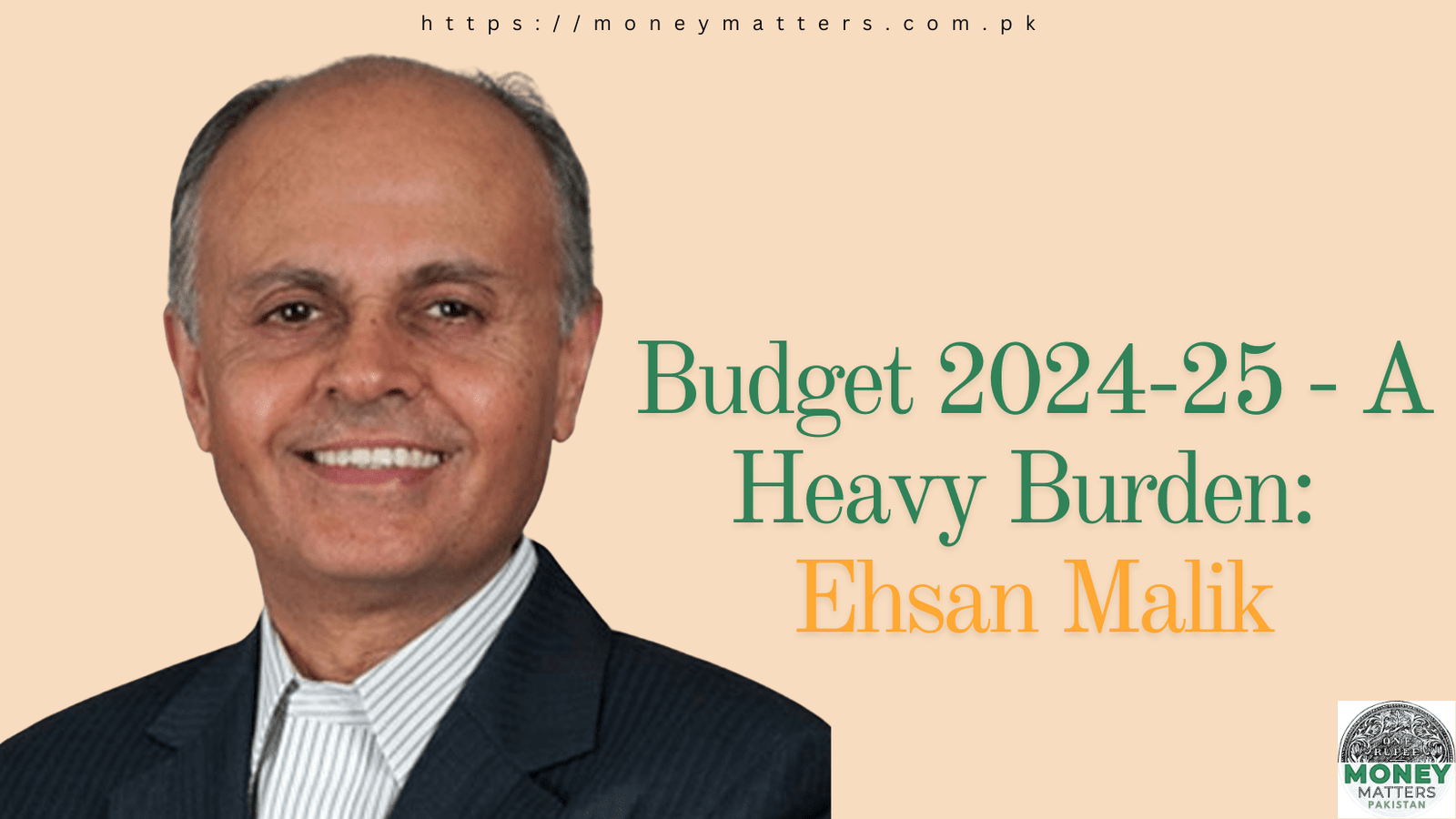
Ehsan Malik, CEO of the Pakistan Business Council
Budget & Taxation

A Heavy Burden: Ehsan Malik’s Critique of Pakistan’s Federal Budget

Money Matters
Published July 6, 2024
3 Min Read

Key takeaways:

  • The budget heavily burdens salaried employees and already taxed individuals while sparing influential sectors, which could undermine its effectiveness.
  • Previous IMF programs have not achieved sustainable reforms due to unrealistic targets and insufficient consideration of implementation capabilities.
  • The current budget focuses on extracting more revenue rather than broadening the tax base, which could harm economic growth.
  • Measures aimed at appeasing the IMF may not align with Pakistan’s long-term economic interests, potentially leading to short-term gains at the cost of future stability.
  • The budget lacks measures to enhance export competitiveness and attract foreign investment, crucial for managing Pakistan’s external accounts

Ehsan Malik, CEO of the Pakistan Business Council, recently provided a detailed critique of Pakistan’s 2024-25 federal budget in an article published by Daily Dawn. Malik begins by questioning the effectiveness of the budget in addressing Pakistan’s economic challenges, particularly its heavy reliance on taxing salaried employees and those already burdened by existing tax obligations, while seemingly sparing influential sectors from similar fiscal responsibilities. He casts doubt on whether the 24th IMF program, which the budget is designed to secure, will bring about the necessary reforms for sustainable economic stability, given Pakistan’s history with previous IMF programs.

Malik draws attention to past IMF programs, noting their tendency to set unrealistic targets without considering the actual capacity of the Federal Board of Revenue (FBR) or the political will of the government to implement substantial reforms. He critiques the budget’s repetition of revenue-extractive measures that deepen existing tax burdens rather than broadening the tax base, which he believes is primarily aimed at meeting IMF expectations rather than fostering long-term economic growth. Malik argues that such short-term, tactical measures, while potentially appeasing international creditors, may not align with Pakistan’s broader economic interests.

Furthermore, Malik highlights the budget’s lack of focus on crucial areas such as enhancing export competitiveness and attracting foreign direct investment, which are essential for managing Pakistan’s external accounts. He expresses concern over specific tax policies, such as the imposition of 18% GST on packed dairy products and advance taxes on retailers, which he predicts could lead to inflation and favor the informal sector over formal businesses. He laments the budget’s failure to consider major recommendations to alleviate the tax burden on the formal sector and promote competitiveness, such as phasing out supertax and revising double taxation policies.

In conclusion, Malik asserts that the budget is inequitable, lacks vision, and fails to address the fundamental economic challenges facing Pakistan. He predicts potential consequences, including missed revenue targets, persistent inflation, and ongoing economic imbalances, questioning whether the 24th IMF program will achieve more than temporary solvency for Pakistan’s economic woes.
You Might Also Like

FBR Collects 96% of Taxes on Autopilot

Pakistan’s Mineral Economy: Unlocking Potential, Building Peace and Prosperity

Sharia Compliance Presents Complexities for Pakistan’s Nascent Crypto Banking Sector

China and Pakistan to Collaborate on Space Mission

Pakistan Government Announces Significant Electricity Tariff Hike

TAGGED:Budget 2024-25Budget 2024-25 Pakistan taxesEhsan Malikfederal budgetIMF programMoney Matters PakistanPakistan Business CouncilPakistan economyPakistan IMF conditions
Share This Article
Facebook Email Print
Leave a Comment

Leave a Reply

You must be logged in to post a comment.

Pakistan Economy

Pakistan Achieves Historic Fiscal Deficit Below 1%

May 12, 2026
Remittances

Pakistan Receives $3.5 Billion in Remittances in April — Up 11.4% Year-on-Year

May 11, 2026
Analyses/Guest Posts

“Every Opportunity Became a Business Model for Extraction” — Dr Umar Saif

May 10, 2026
China & CPEC related

Pakistan Eyes Historic Panda Bond Debut in China Next Week

May 10, 2026
Banking sector

SBP Spent $27 Billion Buying Dollars to Build Reserves 

May 8, 2026
  • Home
  • About us
  • Latest
  • News Categories
    • Pakistan Regional Trade & Ties
    • Debt Matters
    • Budget & Taxation
    • Food & Agriculture Economy
    • Public Sector Enterprises
    • Pakistan Economy
    • Exports
    • IMF Matters
    • Energy and Power
    • Analyses/Guest Posts
  • Write for us
  • Contact
Reading: A Heavy Burden: Ehsan Malik’s Critique of Pakistan’s Federal Budget
Share

About US

Are you passionate about economics, finance, or business? Whether you’re a journalist digging into the latest economic policies, an expert unraveling market trends, a student eager to share fresh perspectives, or a budding writer with a knack for financial storytelling, we’d love to hear from you at Money Matters.
Pakistan Achieves Historic Fiscal Deficit Below 1%
May 12, 2026
Pakistan Receives $3.5 Billion in Remittances in April — Up 11.4% Year-on-Year
May 11, 2026
“Every Opportunity Became a Business Model for Extraction” — Dr Umar Saif
May 10, 2026
Pakistan Eyes Historic Panda Bond Debut in China Next Week
May 10, 2026
© Money Matters. All Rights Reserved.
Welcome Back!

Sign in to your account

Username or Email Address
Password

Lost your password?

Not a member? Sign Up