
Figures from audited airline accounts reveal the toll COVID-era & rupee depreciation took on Pakistan’s four private carriers.
Key Takeaways:
- Pakistan’s four private airlines — Airblue, AirSial, Fly Jinnah and Serene Air — collectively incurred losses exceeding Rs38 billion between 2020 and 2024, according to figures compiled from their audited financial statements.
- Three of the four subsequently turned profitable, recording combined profits of around Rs14 billion, while Serene Air’s Pakistan operations were shut down entirely by the Civil Aviation Authority in October 2025.
- The losses occurred despite high domestic ticket prices, pointing to deep structural challenges including rupee depreciation, expensive jet fuel, post-COVID recovery pressures and intense competition.
Karachi, Pakistan – Pakistan’s private aviation sector endured one of its most bruising financial periods in its short history between 2020 and 2024, with the country’s four private carriers collectively losing more than Rs38 billion before a partial recovery helped three of them return to profitability, according to figures compiled from the airlines’ audited accounts and reported by senior Pakistani journalist Zahid Gishkori of Hum News on April 21, 2026.
The breakdown, drawn from individual audited financial statements, tells a story of an industry hammered by a perfect storm of COVID-19 disruptions, runaway jet fuel costs, a sharply depreciating rupee and constrained fleet expansion.
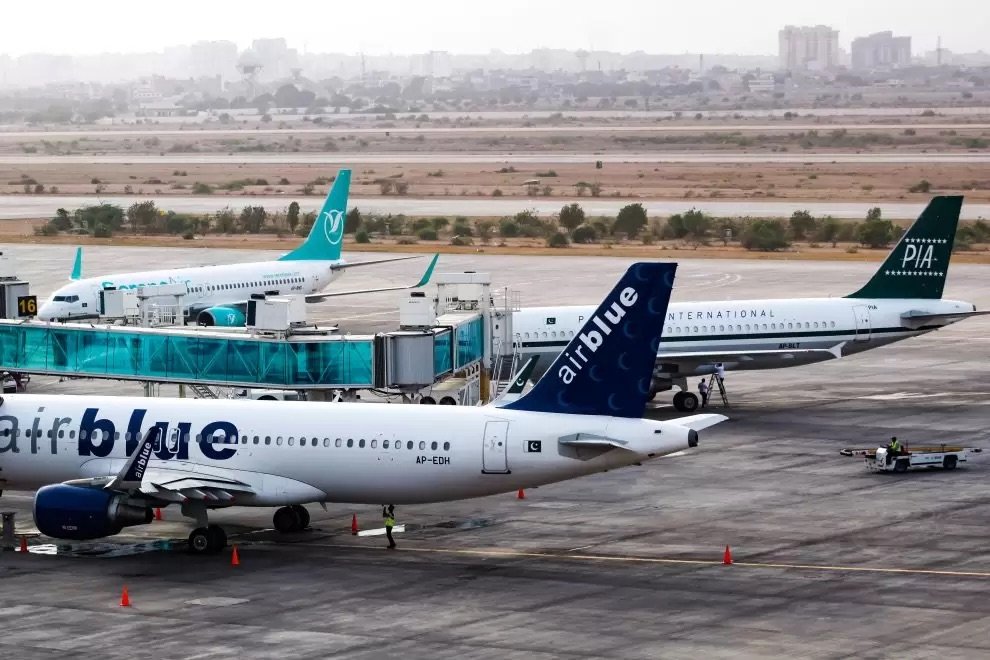
Airblue, Pakistan’s oldest private carrier, bore the heaviest burden — accumulating losses of approximately Rs26 billion between 2020 and 2023 before posting a profit of around Rs1.5 billion in FY2024 as operating conditions improved. AirSial, the Sialkot-based carrier that entered the market in 2020, ran losses of approximately Rs5.5 to 6 billion over a similar period. Fly Jinnah, the youngest entrant and a joint venture between Pakistan’s Lakson Group and UAE’s Air Arabia, lost over Rs3.5 billion in its early years but has since recorded profits exceeding Rs5 billion in subsequent periods — a turnaround widely attributed to its low-cost model and the operational strength of its Air Arabia partnership. Serene Air posted losses exceeding Rs770 million in consecutive years before briefly recovering, only for its Pakistan operations to be suspended by the Civil Aviation Authority in October 2025 after its entire fleet was declared unserviceable, leaving only four active carriers — PIA, Airblue, Fly Jinnah and AirSial — to serve the domestic market.
It is worth noting that these losses occurred even as passengers paid significantly higher fares in recent years, underscoring that the sector’s challenges are structural rather than demand-driven. High capacity charges, rupee-linked fuel and lease costs, and limited access to fleet financing have kept margins thin even in better years.
The aggregate Rs14 billion in profits recorded across the recovery period — concentrated in Fly Jinnah and partially in Airblue — represents a meaningful but incomplete turnaround. The sector has also since absorbed fresh turbulence, with Middle East airspace disruptions caused by the US-Iran conflict in early 2026 forcing cancellations across Airblue, Fly Jinnah and other carriers, adding an estimated Rs20 billion in industry-wide revenue losses.
Disclaimer
This report is for informational purposes and does not necessarily reflect the views of ‘Money Matters Pakistan’. We welcome any corrections or alternative viewpoints from our readers to ensure a balanced perspective.