
A gripping investigation from The Contrapuntal reveals how global powers fight over Balochistan’s vast mineral wealth.
Key Takeaways:
- Barrick Gold denied finding rare earth elements at Reko Diq, but Pakistani geologists and former officials contradict this, raising serious transparency questions.
- The ICSID legal battle against Pakistan cost the country billions in damages and spawned what critics call “legal tourism” for officials travelling first class to London on Balochistan’s public funds.
- Locals in Naukundi near the mine site earn Rs32,000 a month in security jobs while the wealth of their land is loaded onto trucks headed for Karachi.
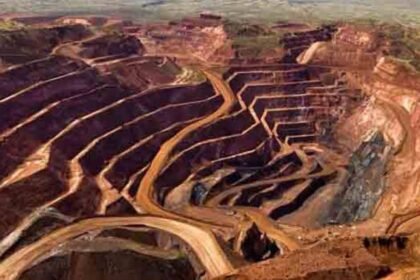
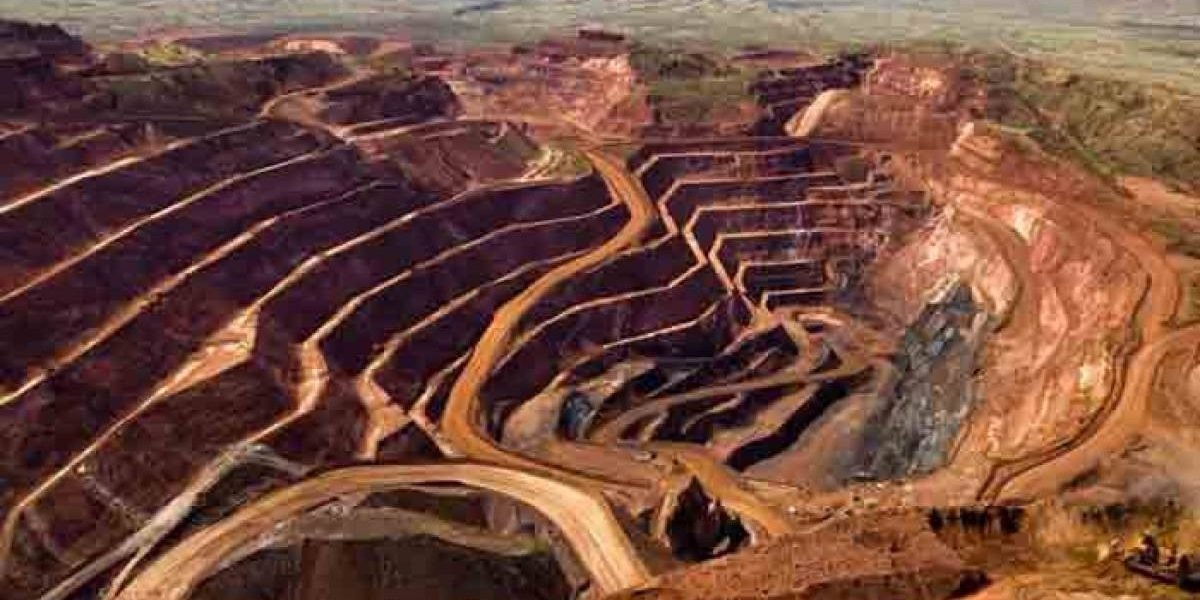
Money Matters Monitoring – In Naukundi, a dusty town in Balochistan’s Chaghi district, a cup of cardamom tea and a wry smile are about all the prosperity on offer. Iranian-made pickup trucks thunder past its modest handful of shops while, somewhere beyond the desert horizon, one of the world’s largest undeveloped copper and gold deposits sits waiting to be excavated. A news story published by The Contrapuntal captures the bitter paradox of this landscape in a single line from local shopkeeper Sarfraz Baloch: “Our bazaar ends before it begins.”
That line could serve as the epitaph of Reko Diq’s decades-long story — a tale of extraordinary mineral wealth, serial mismanagement, opaque corporate conduct, geopolitical manoeuvring, and a local population that has received almost nothing in return.
Balochistan falls into that crowded category of places that is as insecure as it is strategic. Because of geography and local resources, it’s an area where regional and global powers are keen to get a foothold.
The Rare Earth Question Nobody Wants to Answer
Perhaps the most explosive claim in The Contrapuntal’s investigation concerns what actually lies beneath the soil of Balochistan’s Chaghi district.
In December 2022, Barrick Gold, the Canadian mining giant now operating Reko Diq, stood before Pakistan’s Supreme Court and declared that its decade of studies, conducted at a cost of $240 million, had found no rare earth elements (REEs) at the site. The mine, the company insisted, contained only copper and gold.
This declaration did not sit well with those who have spent careers studying the region. According to The Contrapuntal, Quetta-based geologist Inayatullah Baloch said plainly: “We cannot rule out the presence of REEs at the Reko Diq site.” Dr Din Muhammad Kakar, a former professor of geology at the University of Balochistan, told the publication that REEs are present in the system but simply not reported alongside copper, gold, and silver. Professor Muhammad Ishaq Kakar of the University of Balochistan’s Centre of Excellence in Mineralogy added that REEs are found in blister copper and that their rarity is “precisely what makes them strategically valuable.”
Former Chief Minister of Balochistan Nawab Aslam Raisani was even more direct, telling The Contrapuntal at his heavily guarded Quetta residence: “There are not only gold and copper reserves at Reko Diq but nine other elements too, which are going to be the minerals of the future,” including uranium and lithium. Raisani, it should be noted, survived a suicide bombing in 2010 that he believes was directly linked to his decisions about the Reko Diq project.
This question of REEs is not merely academic. Pakistan is believed to hold the world’s fifth-largest copper reserves, gold deposits worth billions, and substantial quantities of lithium, chromite, and rare earth elements. The strategic value of these materials, critical for smartphones, electric vehicles, and missile guidance systems, goes far beyond copper and gold.
A Geopolitical Chess Game
The Contrapuntal’s investigation reveals that China made repeated attempts in the late 2000s, through state giants Metallurgical Corporation of China and China Minmetals Corporation, to gain a foothold in the Reko Diq project. Economist Kaiser Bengali, former adviser to ex-Chief Minister Dr Malik Baloch, told the publication bluntly: “It was mainly the presence of REEs that attracted China.” Given that China controls roughly 97 percent of global REE production, its persistent interest in a project officially declared free of REEs is a detail that demands explanation.
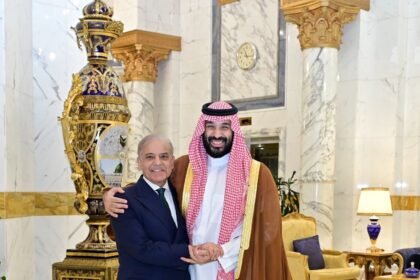
Saudi Arabia also entered this chess game. Saudi Arabia’s Manara Minerals Investment Company, supported by the Saudi Development Fund, planned to invest at least $1 billion in the project by acquiring a minority stake. The Contrapuntal reports the stake was carved from Pakistan’s existing 25 percent share through Pakistan’s Special Investment Facilitation Council (SIFC). However, in a stunning reversal, Manara Minerals subsequently withdrew from the agreement, a development the publication describes as sudden and unexpected.
South Asia analyst Michael Kugelman of Washington DC told The Contrapuntal: “Balochistan falls into that crowded category of places that is as insecure as it is strategic. Because of geography and local resources, it’s an area where regional and global powers are keen to get a foothold.”
Meanwhile, international financing continues to pour in. The US Export-Import Bank approved financing of $1.25 billion for Reko Diq, with plans to bring in up to $2 billion in US mining equipment and services, creating an estimated 6,000 jobs in the US and 7,500 in Balochistan. The Asian Development Bank has also stepped in, approving a financing package that includes up to $300 million in senior loans, projecting Reko Diq will become the world’s fifth largest copper mine when fully complete.
The Original Sin and the Billion-Dollar Blunder
The Contrapuntal traces the roots of today’s crisis to 1993, when the original Chaghi Hills Exploration Joint Venture Agreement was signed between the Balochistan Development Authority and Australian company BHP Minerals — under a caretaker government with a limited mandate. The agreement gave BHP 75 percent of Reko Diq’s shares, with Balochistan receiving a paltry 25 percent.
After a series of questionable ownership transfers and regulatory exemptions that the publication calls a “pattern,” Tethyan Copper Company (TCC), a joint venture between Chile’s Antofagasta and Canada’s Barrick Gold, ended up holding the exploration licence by 2006. When TCC finally submitted its long-delayed feasibility report in 2011, Balochistan’s then-advocate general Amanullah Kanrani was stunned: “Out of 15 holes they had dug, only two were discussed in the report. The other 13 holes were sealed.”
When the mining lease was denied, TCC took Pakistan to the World Bank’s ICSID, seeking $6 billion in damages. The legal battle that followed became, in the words of economist Kaiser Bengali as reported by The Contrapuntal, a bonanza for lawyers and officials: “Our team would go to London; they would need to be given first-class tickets and rooms in five-star hotels, and then there were their legal fees.” Kanrani told the publication with barely concealed disgust: “From Balochistan’s public purse, they went abroad.”
The locals who live above one of the world’s largest undeveloped copper-gold deposits earn Rs32,000 a month in security jobs. That is not development. That is window dressing.
The tribunal ruled against Pakistan in 2017. By December 2022, unable to pay the nearly $6 billion damages claim, Pakistani authorities signed a new contract with Barrick Gold to resume mining at Reko Diq. Under the current structure, Barrick owns 50 percent, the Government of Balochistan holds 25 percent, and three federal state-owned enterprises hold the remaining 25 percent.
What the Locals Actually Get
As reported by Dawn, payments tallied as of June 2025 include $17.5 million in royalties to the Balochistan government and nearly $3.8 million to the federal government in income taxes. Barrick has also stated that 75 percent of its workforce is from Balochistan, the majority from District Chagai.
Yet on the ground in Naukundi, the picture drawn by The Contrapuntal is starkly different. Local resident Tajjal Shah told the publication: “Those who flatter them are given jobs in the company, while others are ignored. The company buys items from Karachi instead of supporting local businesses. As for locals, they are employed in security-related jobs, with a monthly wage of just Rs32,000, which is nothing in this era of rising prices.”
Farmer Mohammad Akhtar raised environmental concerns that go unheard: “We don’t know what this project will do to our water table. Already, the test drilling has affected some of our wells. But nobody listens to us.”
Under the current structure, Barrick owns 50 percent, the Government of Balochistan holds 25 percent, and three federal state-owned enterprises hold the remaining 25 percent.
As The Diplomat reported, history offers a cautionary precedent: the Chinese-run Saindak copper-gold mine in Chagai generated more than $2 billion in sales revenue between 2002 and 2012, reportedly without ever posting a loss, yet did little to improve the lives of ordinary Baloch. Many fear Reko Diq will repeat the pattern.
Perhaps the most surreal detail in The Contrapuntal’s account is this: when Canadian workers built a road to access the mine site, they did not anticipate that the same road would become a route for human smugglers transporting Afghan immigrants toward Iran. The ancestral owners of the land, driven to illegal work for survival, were loading onto trucks the same road their minerals would soon travel down.
As Sarfraz Baloch put it in the final cup of tea poured for The Contrapuntal’s correspondent: “In a nutshell, we are unhappy about the empty promises being made to us, which is why we are still complainants.”
The dust settles. The trucks keep rolling. And the bazaar in Naukundi still ends before it begins.